
Claiming Compensation from Your Credit Card Company or Finance Provider
Paying out thousands of pounds on home improvements only to discover the work is defective, unfinished, or has damaged your property can be extremely distressing. It is also not always easy to understand what your rights are as a consumer.
Perhaps you have had a new roof installed that still leaks, replacement windows that let in water, or damp-proofing work that has failed to solve the problem. You may have contacted the contractor repeatedly, only to be ignored, refused a refund, or told that the problems are not their responsibility.
You might assume your only option is to pursue the contractor or worry about starting a legal claim against them. However, if you paid for the work using a credit card or certain types of finance agreement, you may have an additional legal remedy under Section 75 of the Consumer Credit Act 1974. In qualifying circumstances, Section 75 can make the credit card company or finance provider legally responsible alongside the contractor for a breach of contract or misrepresentation.
This can be particularly valuable where the contractor has ceased trading, refuses to rectify the work or simply cannot afford to compensate you. Read our earlier blog on claiming against a finance company for spray foam insulation.
Can You Make a Section 75 Claim for Faulty Home Improvements?
Section 75 may apply where home improvement works were paid for using a qualifying credit agreement, and the contractor breached the contract or made a relevant misrepresentation.
The protection can cover a wide range of home improvements, including:
- Roofing and roof repairs
- Replacement windows and doors
- Kitchen installations
- Bathroom installations
- Damp-proofing and timber treatments
- Extensions and building alterations
- Conservatories
- Driveways and patios
- Insulation and energy-efficiency improvements
- Heating installations
- Other qualifying building and renovation works
There are factors that must be proved for a claim to be considered, and home improvements work that are causing a problem does not automatically establish a claim. There must be evidence of a relevant contractual breach or misrepresentation, and the statutory requirements must be satisfied.
What Is Section 75 of the Consumer Credit Act 1974?
Section 75 is a form of consumer rights protection which can make a lender jointly and severally liable with a supplier.
In practical terms, where Section 75 applies, you may be able to claim directly against the credit card company or finance provider for the contractor’s breach of contract or misrepresentation. You do not necessarily have to obtain a judgment against the contractor first. For example, suppose you paid £8,000 for replacement windows using a qualifying credit agreement. After installation, water begins entering your home because the windows were fitted incorrectly. The contractor refuses to return and rectify the defects.
If the requirements of Section 75 are met, you may be able to pursue the finance provider for the losses caused by the defective installation.
Does Section 75 Apply to All Home Improvement Contracts?
For the usual Section 75 protection to apply, the cash price of the relevant goods or services must be more than £100 and not more than £30,000, so it does not apply to all situations.
It is the cash price of the qualifying purchase that matters, rather than simply the amount paid using credit. There must also be the necessary legal relationship between the customer, supplier, and lender, commonly called the debtor-creditor-supplier relationship.
The exact contractual arrangements are important, particularly where brokers, intermediaries, subcontractors, or third-party payment services were involved. For some transactions exceeding £30,000, Section 75A may provide a separate and more limited form of protection, subject to additional statutory conditions.
What if I Only Paid the Deposit by Credit Card?
You may still be protected in these circumstances. One of the most useful features of Section 75 is that the whole purchase price does not necessarily need to have been paid using the credit card. For example, suppose you agreed to pay £12,000 for a new kitchen and paid a £500 deposit directly to the kitchen company using your credit card and then paid the remaining £11,500 by bank transfer.
If the transaction otherwise satisfies Section 75, the credit card company may be liable for qualifying losses arising from the contractor’s breach, rather than liability being limited to the £500 deposit.
This is why it is worth checking how the work was paid for, even if most of the money came from savings.
What if I Used Finance Arranged by the Contractor?
Section 75 may also apply to qualifying point-of-sale finance. Many home improvement companies arrange finance for their customers, particularly for more expensive installations.
Examples include finance used to pay for:
- New windows and doors
- Roof replacements
- Insulation
- Heating systems
- Conservatories
- Kitchens and bathrooms
Where the finance agreement falls within the statutory protection, the lender may be responsible for qualifying breaches of contract or misrepresentations by the supplier. However, not every loan is covered.
An ordinary personal loan obtained independently from your bank to fund building work will not normally create Section 75 liability simply because you subsequently used the money to pay the contractor. The precise finance arrangements must be reviewed.
What if I Paid by Debit Card or Bank Transfer?
Section 75 generally does not apply to payments made solely by debit card, cash or bank transfer.
However, that does not necessarily mean you have no claim. You may still have contractual or statutory rights against the contractor.
Where a debit card was used, the bank may also be able to consider a chargeback request under the relevant card scheme rules. Chargeback is different from Section 75 and is subject to separate requirements and time limits.
What Rights Do Homeowners Have When Building Work Is Defective?
The Consumer Rights Act 2015 provides important protections where a trader supplies services to a consumer. Generally, the trader must carry out the service with reasonable care and skill. Where the contract includes goods, such as windows, roofing materials or kitchen units, additional statutory rights may apply to those goods.
If the contractor fails to comply with the applicable obligations, remedies may include repeat performance, a price reduction or damages, depending on the circumstances. The particular remedy depends on the contract, the breach and the losses suffered. For example, a homeowner may need an independent surveyor or suitably qualified specialist to establish that the work was defective and identify what is required to rectify it.
What Problems Could Give Rise to a Section 75 Claim?
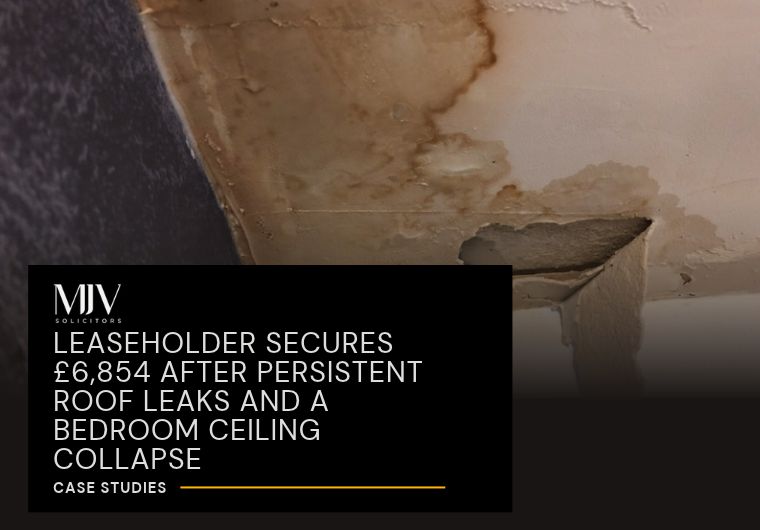
Defective roofing: A roof replacement may give rise to a claim where the work was carried out improperly and results in leaks, damaged roof coverings, inadequate flashing or other defects. A claim may include the reasonable cost of necessary remedial works and consequential damage, where recoverable.
Poorly installed windows and doors: Problems may include water ingress, draughts, failed seals, inadequate fitting or damage to surrounding walls.The fact that a window has condensation or another problem does not necessarily prove faulty installation. Expert evidence may be needed to identify the cause.
Defective kitchens and bathrooms: Examples include plumbing leaks, inadequate waterproofing, faulty electrical work, poorly fitted units or unfinished installations. Where defective workmanship causes damage to floors, ceilings or other rooms, consequential losses may arise.
Failed damp-proofing treatments: Homeowners sometimes pay substantial sums for damp-proofing treatments which fail to address the actual cause of dampness.A claim may arise where the contractor failed to exercise reasonable care and skill or made misleading representations about the work required or its likely effectiveness.
Defective extensions and building alterations: Problems may include structural defects, water ingress, inadequate foundations, non-compliant installations or unfinished work. Building projects can involve several contractors and separate contracts, making it especially important to identify which supplier was responsible for the relevant breach.
Insulation and energy-efficiency work: We have seen how problems involving spray foam insulation can create serious difficulties for homeowners, including spray foam insulation and mortgage problems. Similar legal principles may arise with other insulation and energy-efficiency installations where the contractor’s work was defective, or representations made before the installation were misleading. However, the existence of an installation, or a lender’s reluctance to lend against a property, does not automatically establish that the contractor breached its legal obligations. Each case requires consideration of the evidence.
Can I Claim for Damage Caused to My Property?
You can potentially claim for property damage. A Section 75 claim is not necessarily limited to recovering the original installation price. Where the contractor’s breach of contract caused additional reasonably foreseeable losses, those losses may also be recoverable, subject to the usual legal requirements. For example, a poorly installed roof might cause water damage to internal plasterwork, decoration or possessions. A defective bathroom installation might result in a leak damaging the ceiling below.
Recoverable losses will depend on causation, the contractual position, reasonable mitigation and the available evidence.
Can I Claim the Cost of Putting the Work Right?
The reasonable cost of remedial work is often central to a defective home improvement claim. However, it is important to establish:
- What the contractor agreed to provide
- What work was actually carried out
- Why the work is defective
- What repairs are reasonably necessary
- Whether the proposed repairs are proportionate
- Whether the contractor has already attempted rectification
An independent expert report can be particularly important where the contractor or lender disputes the existence or cause of the defects.
What if the Contractor Has Gone Out of Business?
This is one of the situations where Section 75 can be particularly valuable. Where the statutory requirements are satisfied, the lender’s potential liability does not simply disappear because the supplier has ceased trading.
You may therefore be able to pursue the lender even where the original contractor has been dissolved, entered liquidation or is otherwise unable to meet a claim. The underlying breach or misrepresentation must still be proved.
What if the Finance Has Already Been Repaid?
Repaying the credit card balance or settling the finance agreement does not necessarily extinguish a qualifying Section 75 claim.
The important issues include the original transaction, the nature of the credit agreement and whether the statutory requirements were met. You should therefore retain the original finance documents even after the account has been closed.
Do I Have to Give the Contractor a Chance to Fix the Work?
The appropriate course depends on the circumstances. Consumer law may give the trader an opportunity to repeat or rectify defective services in certain situations.
However, further performance may be impossible, unreasonable or inappropriate, particularly where previous repairs have failed, or the contractor has ceased trading. Before instructing another contractor to carry out permanent remedial works, it is generally sensible to preserve evidence and obtain advice.
Urgent action to prevent further damage or address a safety risk may nevertheless be necessary.
What Evidence Do I Need for a Section 75 Claim?
The stronger the evidence, the easier it is to establish the nature of the claim. Useful documents may include:
- The original quotation and contract
- Invoices and receipts
- Credit card statements or finance agreements
- Sales brochures and written promises
- Guarantees and warranties
- Photographs of the defects
- Correspondence with the contractor
- Records of complaints and attempted repairs
- An independent expert report
- Quotations for remedial work
- Evidence of consequential losses
Where the problem concerns defective building work, technical evidence is often decisive. A complaint that the work is unsatisfactory may not be sufficient without evidence explaining why it is defective and what needs to be done.
What if My Credit Card Company or Lender Rejects the Claim?
A rejection does not necessarily mean that the lender’s decision is correct.
The lender may dispute:
- Whether Section 75 applies
- Whether there was a breach of contract
- Whether representations were misleading
- Whether the alleged defects were caused by the contractor
- The amount of compensation claimed
- Whether the losses are recoverable
The reasons for rejection should be considered carefully. Where the lender has issued a final response or has not responded within the applicable complaint-handling period, it may be possible to refer the complaint to the Financial Ombudsman Service, subject to eligibility and time limits.
Court proceedings may also be an option in appropriate cases.
The most suitable route depends on the claim, the evidence, the limitation, and the remedies sought.
Is There a Time Limit for a Section 75 Claim?
In England and Wales, a claim for breach of a simple contract is generally subject to a six-year limitation period running from the relevant breach, although the position can be more complicated depending on the cause of action and circumstances.
The Financial Ombudsman Service also applies separate complaint referral time limits.
Homeowners should therefore seek advice promptly rather than assume that a guarantee or warranty extends every legal deadline.
Can I Make a Section 75 Claim if the Contractor Provided a Guarantee?
Possibly. A guarantee may provide additional rights, but it does not necessarily replace statutory or contractual remedies. Equally, the fact that a guarantee exists does not prove that the original work was defective.
The terms of the guarantee, the cause of the problem and the relevant legal rights all need to be considered.
Will MJV Solicitors Take My Section 75 Claim on a No Win, No Fee Basis?
Whether a claim is suitable for a Conditional Fee Agreement depends on the circumstances. In particular, we would need to consider whether there is a viable claim against a qualifying lender, the available evidence, the value of the claim, the prospects of success and the likely recoverability of legal costs. Therefore, we cannot offer no-win, no-fee funding for every defective home improvement dispute.
Where the claim is against the contractor alone, or the prospects of recovering costs are insufficient, private funding may be required.
We will explain the available options following an initial assessment.
Section 75 Claim Solicitors in Blackpool and Across England and Wales
Defective home improvements can leave homeowners facing substantial repair bills, property damage, and considerable uncertainty.
If you paid for the work using a credit card or qualifying finance agreement, you may have rights against the lender as well as the contractor. Section 75 can be particularly valuable where the contractor refuses to resolve the problem or has ceased trading.
The important first step is to establish whether the credit arrangements qualify, whether the contractor breached the contract, and what losses can be proved. MJV Solicitors can review claims involving defective home improvement works and potential Section 75 liability.
We can consider:
- Whether the payment method qualifies for Section 75 protection
- Whether there is evidence of breach of contract or misrepresentation
- Whether independent expert evidence is required
- Whether losses can be recovered from the lender
- Whether the lender’s rejection can be challenged
- Whether the claim is suitable for litigation
- What funding arrangements may be available
We assist clients in Blackpool, Thornton-Cleveleys, across Lancashire and throughout England and Wales. If home improvement work has caused problems at your property and you paid by credit card or qualifying finance, contact MJV Solicitors with details of the work, the payment arrangements and the defects.
We can assess whether you may have a claim against the contractor, the lender, or both.
Speak to MJV Solicitors
If you think you may have a spray foam insulation compensation claim, get in touch, and our team will review your situation.
Call: 01253 858231
Email: info@mjvlaw.co.uk
Make an online enquiry.
Frequently Asked Questions
Potentially, if the roof work was defective, the relevant contract and payment arrangements qualify, and the leak resulted from a breach of contract or misrepresentation.
Yes, potentially. Qualifying point-of-sale finance may provide Section 75 protection where the supplier breached the contract or made a relevant misrepresentation.
It can. The statutory requirements must be met, including the relevant cash-price limits and the debtor-creditor-supplier relationship.
Potentially. The amount charged to the card does not necessarily need to equal the full purchase price. However, the cash price of the relevant purchase must be more than £100 and not more than £30,000 for the usual Section 75 protection.
Potentially. A qualifying lender can remain liable even where the contractor is no longer trading.
Potentially, where the damage is legally recoverable as a consequence of the contractor's breach.
Not in every case, but technical evidence is often important where defective workmanship or the cause of property damage is disputed.
Section 75 would not normally apply to a transaction funded solely by bank transfer, but other contractual or statutory remedies may be available.
Potentially. Settlement of the finance does not automatically remove Section 75 protection.
In many cases, raising a written complaint with the lender is a sensible first step. Where defects are substantial, limitation is approaching or the lender disputes liability, legal advice may be appropriate.