
Housing Disrepair Case Study – Local Authority Tenant, Damp and Mould, Defective Windows and Lack of Ventilation
MJV Solicitors acted for a tenant who brought a housing conditions claim against her local authority landlord arising from longstanding disrepair at a two-bedroom flat in a purpose-built block in London. The claim concerned the landlord’s failure to comply with its repairing obligations under section 11 of the Landlord and Tenant Act 1985, sections 8 and 9A of the Landlord and Tenant Act 1985 as amended by the Homes (Fitness for Human Habitation) Act 2018, the Defective Premises Act 1972, and the common law.
The client occupied the property under a secure tenancy. The landlord was responsible for the repair and maintenance of the structure and exterior of the dwelling, including windows and doors, and for ensuring that the property was fit for human habitation throughout the tenancy.
The client had been reporting disrepair to the landlord for a number of years prior to legal proceedings being issued. Despite repeated complaints, inspections and partial works, the underlying defects were not remedied within a reasonable period.
What Was the Nature of the Disrepair?
The defects complained of included:
- Persistent damp and mould affecting bedrooms and living areas.
- Water ingress through a defective living room window during wet weather.
- Excessive heat loss caused by gaps and failures in windows and the front door.
- Lack of adequate ventilation within the property.
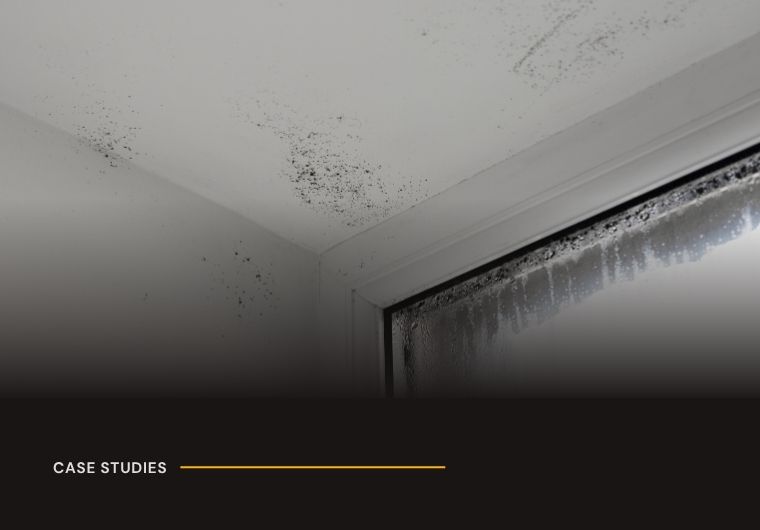
The client also experienced condensation mould throughout the flat, exacerbated by the absence of mechanical extraction in both the kitchen and bathroom. The bathroom tiles showed visible bowing and mould growth, and windows within the property were found to be defective, insecure, or no longer operable. One bedroom window could not be opened at all, and another window was no longer weather-tight or safe.
The landlord had previously carried out limited works, including the installation of thermal boarding to a bedroom wall and replacement of the front door. However, these measures failed to resolve the underlying issues, and defects continued to recur.
Eventually, the tenant reached out to our expert team at MJV Solicitors, specialists in housing disrepair claims for council and housing association tenants.
Legal Basis of the Claim
The claim was pursued under the Pre-Action Protocol for Housing Conditions Claims (England). The landlord was placed on formal notice of the defects by way of a detailed letter of claim setting out the history of disrepair, the statutory breaches relied upon, and the health and safety risks posed to the tenant.
The legal basis of the claim included:
- Breach of section 11 of the Landlord and Tenant Act 1985 in failing to keep the structure and exterior of the dwelling in repair.
- Breach of sections 8 and 9A of the Landlord and Tenant Act 1985 as amended by the Homes (Fitness for Human Habitation) Act 2018.
- Failure to address hazards relating to damp, mould, excess cold and security under the Housing Health and Safety Rating System.
- Failure to act within a reasonable time following notice of disrepair.
The tenant sought specific performance of the landlord’s repairing obligations and damages for distress, inconvenience and loss of amenity.
What Expert Evidence Was Used?
Given the landlord’s continued denial of liability and failure to carry out effective remedial works, expert evidence was obtained. The claimant’s expert carried out an inspection of the property and produced a detailed housing conditions report.
The expert concluded that the landlord had failed to fulfil its repairing obligations. The report identified defective windows requiring replacement, inadequate ventilation to the kitchen and bathroom, ongoing condensation mould, and associated risks to the tenant’s health and safety. A Scott Schedule was prepared, setting out the necessary remedial works and associated costs.
The Court Proceedings and Outcome
Court proceedings were issued after the landlord failed to file a defence or engage properly with the claim. The court entered judgment for the tenant and granted permission for reliance on the expert report.
The court ordered the landlord to carry out the specified remedial works identified in the expert’s Scott Schedule within a defined timeframe. The landlord was also ordered to pay damages to the tenant, to be assessed by the court at a disposal hearing, together with the tenant’s costs.
The Key Outcome and Significance of This Case
This case demonstrates that local authority landlords can be held to account where they fail to remedy disrepair despite repeated reports from tenants. It highlights the importance of expert evidence in housing disrepair claims and confirms that failure to engage with proceedings can result in judgment being entered and enforcement action being taken by the court.
MJV Solicitors regularly act for tenants in housing disrepair and housing conditions claims against councils and housing associations, including cases involving damp and mould, defective windows, lack of ventilation, and failures to comply with the Homes (Fitness for Human Habitation) Act 2018.
Could You Be Owed Compensation?
If you’re a council or housing association tenant and your landlord has ignored issues like damp, mould, leaks or cold homes, you may be entitled to repairs and financial compensation.
We’ll handle the claim from start to finish.
Our housing disrepair solicitors can help you:
- Get expert evidence
- Make a successful claim
- Ensure your landlord carries out repairs
- Claim on a no-win, no-fee basis
For related information, please read these guides:
- What Landlords Must Repair in Council or Social Housing
- How to Gather Evidence for a Housing Disrepair Claim
- What Makes a Property Unfit for Human Habitation?
Get in Touch Now for a Free Case Assessment
- Call us on 01253 858231
- Visit our website for more information about how to start your claim for Housing Disrepair
Read about some of our other successful disrepair claims, and how we helped:
- Family Wins £10,500 Compensation After Years of Damp, Mould and Failed Repairs
- Damp, Mould and Draughty Windows in Maidstone Flat: Tenant Wins £2,250 in Compensation
- Leaseholder Wins £16,800 Compensation Over Damp, Leaks, and Failed Repairs
- Leaks, Damp and Mould in Council Flat: How We Helped a Croydon Tenant Claim Over £14,000
- Leaks Caused Significant Damage for Wandsworth Leaseholder – Our Team Helped the Tenant Claim Over £14,000.