
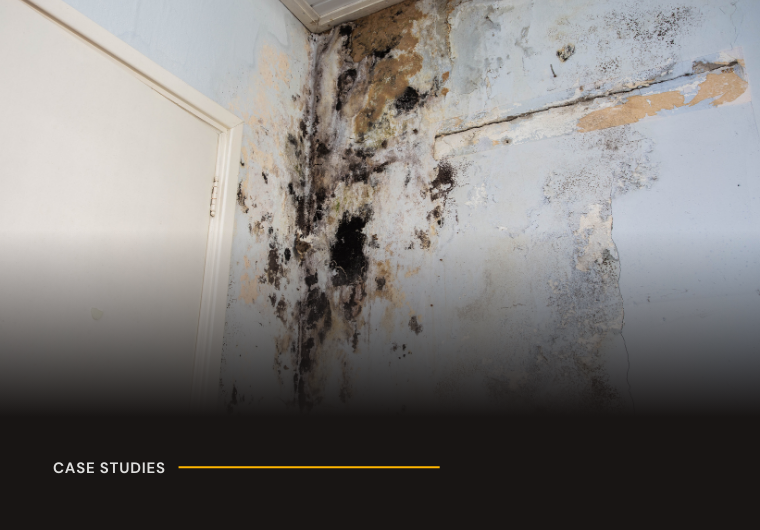
Housing Conditions Claim Against Freeholder — A Case Study
When a leaseholder experienced prolonged damp, mould and water ingress affecting their flat, they turned to our housing disrepair solicitors for assistance. The result? £7,900 in compensation, an agreement that the freeholder would carry out necessary remedial works, and payment of the client’s legal costs following settlement shortly before trial.
The Disrepair Issue — What Happened?
MJV Solicitors acted for a long leaseholder who brought a housing conditions claim against the freeholder and managing authority of a purpose-built block of flats. The claim arose from the freeholder’s failure to comply with its repairing obligations under the express covenants contained within the lease.
The client owned a long leasehold interest in the property and was therefore not a tenant. The claim was pursued on the basis of breach of lease, common law obligations, and failure to maintain the structure and exterior of the building in accordance with the lease terms.
The matter was progressed through the Pre-Action Protocol for Housing Conditions Claims (England), issued at court, and ultimately resolved by way of a Tomlin Order prior to trial.
Nature of the Disrepair
The leaseholder had reported disrepair to the freeholder over a prolonged period. The defects complained of included:
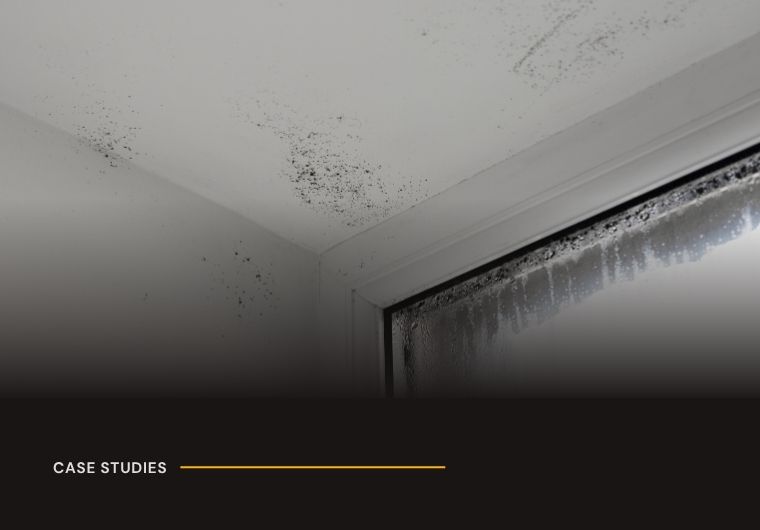
- Dampness and mould affecting bedrooms and living areas
- Water ingress associated with external structural elements, including balcony areas
- Defective external masonry and pointing, allowing moisture penetration
- Internal damage to plaster finishes arising from external defects
The client had repeatedly placed the freeholder on notice of the defects from early 2020 onwards, including formal complaints and correspondence, but meaningful remedial works were not undertaken within a reasonable timeframe.
Legal Basis of the Claim
The claim was not brought under statutory repairing provisions applicable to tenants. Instead, it was founded on:
- Express repairing covenants within the lease requiring the freeholder to keep the structure and exterior of the building in repair
- The freeholder’s obligation to maintain common parts and external elements so as not to cause damage to the demised premises
- Breach of contract and breach of common law duties arising from failure to act following notice
The relevant lease provisions placed responsibility on the freeholder for the structure, exterior, and common parts of the building, including external walls and balconies, and for making good defects affecting those elements.
For related information, please read: ‘Can Leaseholder Claim Compensation for Disrepair?’
Expert Evidence and Court Proceedings
Given the ongoing dispute as to liability and causation, expert evidence was obtained. The claimant’s expert identified defects consistent with water ingress and confirmed that external elements under the freeholder’s control were capable of causing the internal damage complained of.
Following issue of proceedings, the court directed the preparation of a joint expert statement. While there were areas of disagreement between the experts, it was agreed that certain external defects had caused internal damage and required remedial works to prevent recurrence.
The matter proceeded towards trial, with liability and quantum actively contested.
The Legal Outcome – How MJV Solicitors Helped
Shortly before trial, the parties reached agreement and the claim was resolved by way of a Tomlin Order, staying the proceedings on agreed terms.
The settlement provided for:
- Payment of £7,900 in compensation to the leaseholder for distress, inconvenience and loss of amenity
- An agreement that the freeholder would carry out specified remedial works to external and structural elements within a defined period
- Payment of the leaseholder’s legal costs on the standard basis
Important Outcomes of the Case
This case demonstrates that leaseholders can pursue claims where a freeholder fails to comply with repairing obligations contained within a lease. It also highlights the importance of expert evidence and the effectiveness of progressing a claim through the court process where liability is disputed.
MJV Solicitors regularly act for tenants and leaseholders in housing disrepair and housing conditions claims involving damp, mould, water ingress, and structural defects, including claims against councils, housing associations, and private freeholders.
Are You a Leaseholder or Tenant Living with Damp, Mould or Disrepair?
You may be entitled to compensation if your landlord or freeholder has failed to carry out necessary repairs. Our leasehold disrepair solicitors can help you:
- Obtain expert evidence
- Pursue a claim for compensation
- Ensure necessary repairs are carried out
- Understand your legal rights as a tenant or leaseholder
Get in Touch Now for a Free Case Assessment
- Call us on 01253 858231
- Message us on WhatsApp or Facebook
- Visit our website for more information about how to start your claim for Leasehold Disrepair
Read about some of our other successful disrepair claims, and how we helped:
- Croydon Tenant Wins £12,500+ for Severe Damp and Mould in Council Flat
- Damp, Mould and Draughty Windows in Maidstone Flat: Tenant Wins £2,250 in Compensation
- Leaseholder Wins £16,800 Compensation Over Damp, Leaks, and Failed Repairs
- Leaks, Damp and Mould in Council Flat: How We Helped a Croydon Tenant Claim Over £14,000